April 2023
Optimising for the Cheapest Power in NZ
Who offers the cheapest power for my needs? That's the question I sought to answer, but the answer was a lot more complicated than I expected.
It's amusing that there are a bunch of power utility companies in New Zealand, most of whom both generate and retail power, are 51% owned by the government, and seemingly try to compete for your business with "differentiated" plans. One would think this is a perfect case for a natural duopoly (since the government basically owns the show), but alas that isn't the case.
The Research Method
The best way to find out which provider offers the cheapest power is to go to every site, get the levers and unit prices they use for pricing, put it into Excel, and then plot it out. That's exactly what I did.
Important caveat: This analysis only applies to Central Auckland. Since there are different lines companies and charges, power pricing is very localized. Also, given how quickly power prices are moving upwards, the figures may be out of date. However, the relative spread between providers is what I wanted to highlight today.
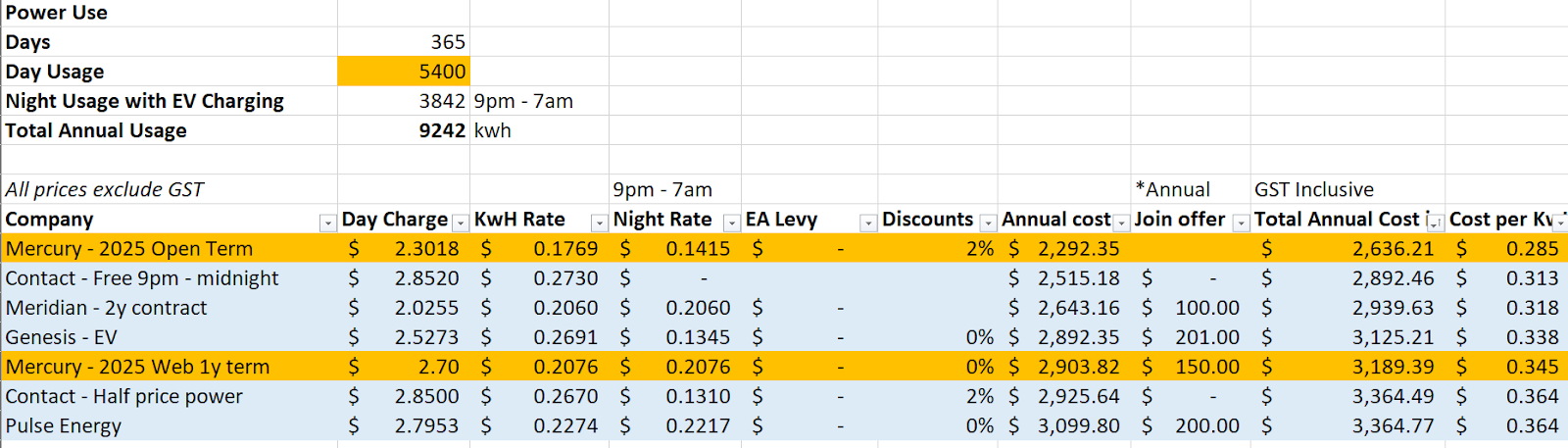
The relative pricing across different power companies and usage levels
The Findings
When I plot the data onto a graph, it becomes very obvious who has the best and worst packages overall, even when accounting for various usage levels.
Key Takeaway
Basically, if you use between 4,000 - 10,000+ kWh annually, Mercury is the best option. However, at very high usage levels (above 10,000 kWh), Contact will likely be a better option.
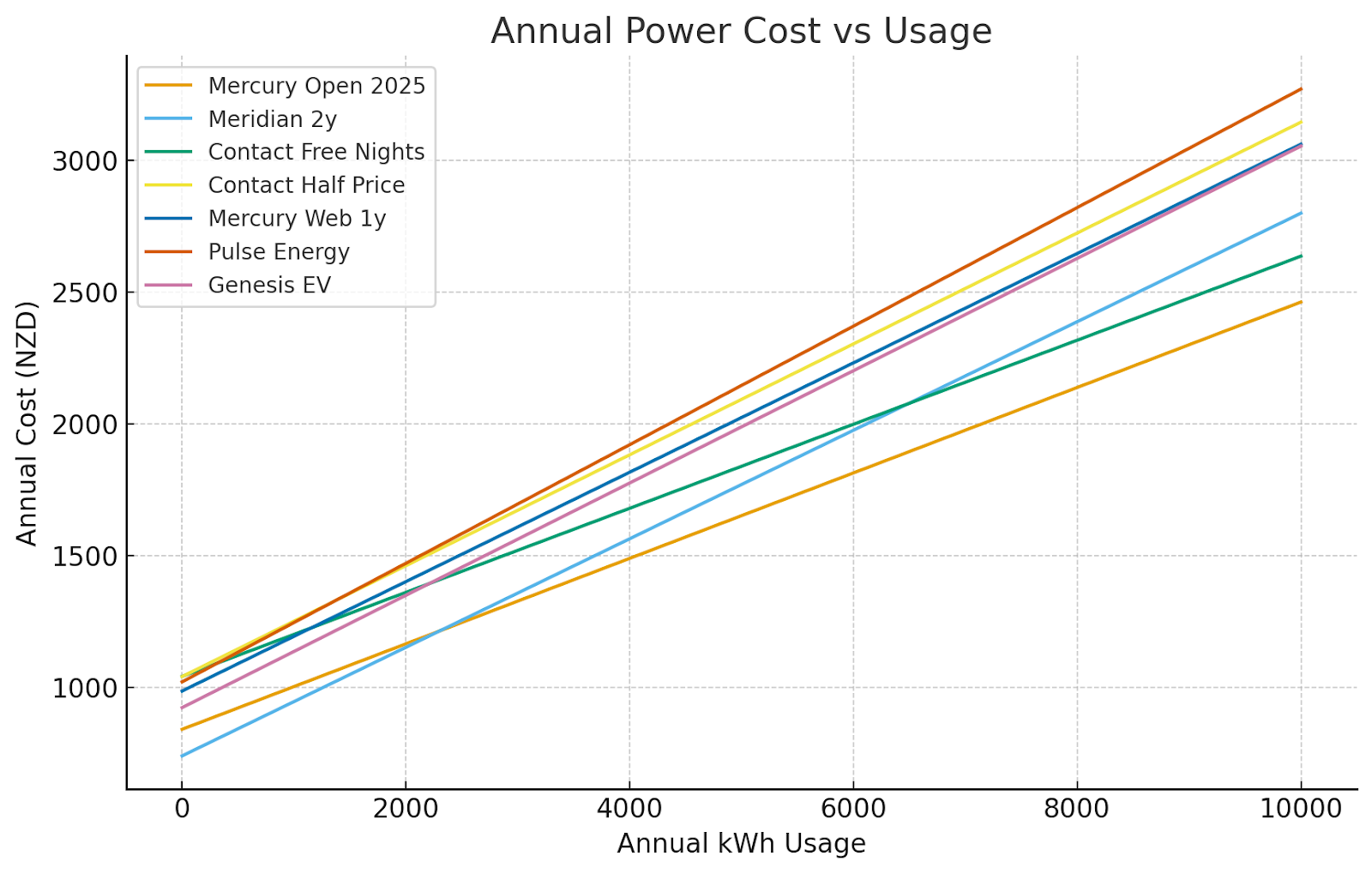
The spread of pricing differences across various usage patterns
The Variability Problem
What's really interesting is how different everyone is (except maybe Pulse). Meridian especially goes from the cheapest plan to being relatively expensive within a few thousand kWhs. This suggests that Meridian's pricing strategy is heavily usage-dependent, which means you need to calculate your own usage pattern before choosing them.
The Competitors
The main power utility companies in New Zealand include:
- Mercury — Best for mid-range usage
- Contact — Competitive at high usage
- Meridian — Highly variable based on usage
- Pulse — Relatively consistent pricing
What This Means for You
The takeaway is simple: don't assume one provider is always the cheapest. Your personal power usage pattern matters significantly. It's worth doing the calculation yourself using your own consumption data (which you can get from your power bill) and comparing it against the current rates from each provider.
Recommendation: If you're using 4,000-10,000 kWh per year, shopping around and switching to Mercury could save you hundreds of dollars annually.